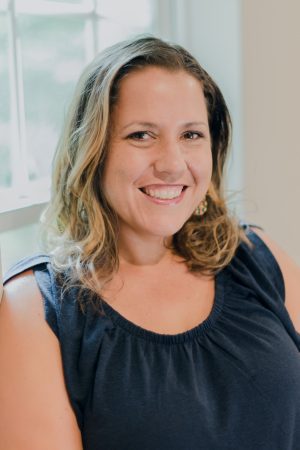
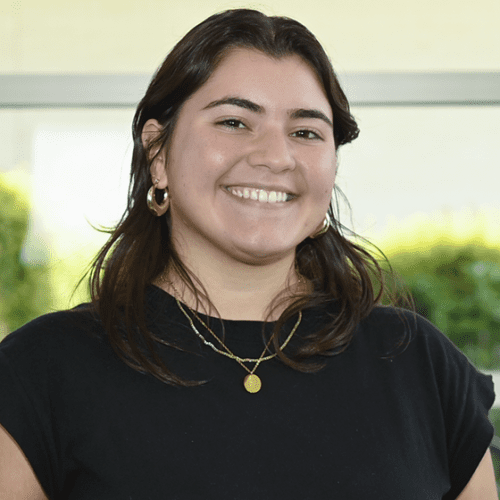
About Sarah
- Graduate Program: Master of Arts in English
- Concentration/Area of Emphasis: Creative Writing
- Current Employer: University of Georgia
- Position: PhD Student/Graduate Teaching Assistant
- Graduation Year: 2025
- Undergraduate Institution: UNC Charlotte
- Undergraduate Degree: English
- Favorite Place in Charlotte: Independent Picture House
- Hometown: Louisville, KY
Q&A with Sarah
Why did you choose UNC Charlotte for graduate school?
My decision to attend UNC Charlotte for graduate school was both a continuation and a deepening of a journey I had already begun. I completed my undergraduate degree at UNC Charlotte, and over those years, I formed strong relationships with faculty in the English department who played a crucial role in shaping my academic and creative identity. It was through their mentorship that I first began to see myself as someone who could not only pursue graduate study but thrive in it. Those same mentors were the ones who encouraged me to stay and take my work further in the M.A. program. When I began applying to graduate schools, I was looking for a program that would allow me to grow both as a scholar and a poet. UNC Charlotte stood out because it
offered exactly that—a space where literary criticism and creative writing were in conversation, not competition. The English M.A. program’s flexibility gave me the freedom to explore multiple interests in tandem, including poetry, Shakespeare, and adaptation studies. I never felt I had to choose between those parts of myself; instead, I was encouraged to let them inform each other.
Equally important was the opportunity to teach. I knew from the beginning that I wanted to pursue a Ph.D. and eventually teach at the university level, and UNC Charlotte’s strong commitment to graduate teaching assistantships provided invaluable classroom experience right away. From my very first semester, I was able to observe, assist, and eventually lead in undergraduate courses, learning how to foster discussion, manage a syllabus, and connect with students.
Even though I already knew many of the faculty, I continued to be impressed by how genuinely invested the department was in its graduate students. The mentorship I received as an undergraduate only deepened in graduate school—more rigorous, more collaborative, and more transformative. Looking back, I know I made the right decision to stay. It allowed me to keep building on everything I’d started and take creative and intellectual risks within a community that both challenged and supported me.
What skills or knowledge gained in your graduate program have been most valuable in your career?
The most valuable thing I took from my time at UNC Charlotte is the ability to think and work across disciplines. My thesis, What We Hold, was a hybrid of poetry and critical writing. Writing it taught me how to weave personal narrative with literary allusion, how to conduct close readings not just of texts but of memory, and how to revise meaningfully across multiple drafts and genres.
But beyond that, I gained practical, professional skills that I carry with me into my Ph.D. and beyond—how to teach writing in a way that centers student voice, how to coordinate academic events like symposia, and how to engage in thoughtful, respectful peer critique. I also developed time management strategies that helped me balance coursework, writing, teaching, and research—a juggling act that becomes second nature in grad school.
Are there any faculty, staff or support services that positively impacted your experience at
Charlotte?
Absolutely—my experience at UNC Charlotte was shaped in profound ways by the mentorship and support of specific faculty members. Professor Allison Hutchcraft, my thesis advisor, was an incredible guide throughout the creative and critical process of writing What We Hold. Her thoughtful feedback, steady encouragement, and willingness to let me take artistic and intellectual risks were essential to the development of my voice as a poet. She always struck the right balance between pushing my work to be sharper and stranger while also respecting the emotional truths embedded in it. I grew immensely under her mentorship, not just as a writer but as a thinker.
I’m also deeply grateful to Dr. Kirk Melnikoff, who has been my mentor since my undergraduate years and remained a foundational influence throughout my graduate career. His classes were where I first fell in love with Shakespeare—not just as literature, but as a living archive of questions about performance, politics, and identity. Dr. Melnikoff’s passion for early modern drama, his generosity with his time and knowledge, and his belief in my potential helped me chart a path toward my Ph.D. studies. He was the person who first made me feel like I belonged in the field.
What advice would you give to prospective and current UNC Charlotte graduate students?
First, say yes to as many opportunities as you can—but also learn when to say no. Graduate school is full of invitations: to present, to collaborate, to lead. Lean into those chances, especially if they scare you a little. Organize that panel. Submit to that journal. Try that class outside your comfort zone. But also listen to yourself. Rest is part of the process, and burnout is real.
Second, build relationships—with your cohort, with faculty, with staff. So much of what sustained me in this program was the people around me. Graduate school can feel isolating at times, but it doesn’t have to be. Form writing groups, share resources, celebrate each other’s wins.
Finally, trust your work. There’s no one path through grad school, and your voice—whether academic, creative, or both—has value. I came into UNC Charlotte with a rough idea of who I was as a writer and thinker. I left with a much clearer sense of the kind of scholar I want to be, thanks to the support, freedom, and challenges this program offered.
More Graduate Niner Spotlights
Explore the stories of our Graduate Niners and Faculty who are making a meaningful impact at Charlotte.
Patricia Archilla Fraticelli