Md Rahatuzzaman
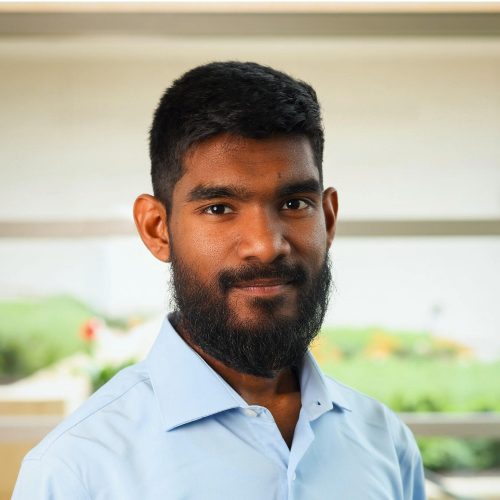
- Current Graduate Program: Mechanical Engineering, Ph.D.
- Program Schedule: Full-Time
- Delivery Method: In-Person
- Current Employer: UNC Charlotte
- Position: Graduate Teaching Assistant
- Anticipated Graduation: December 2028
- Undergraduate Institution: Military Institute of Science and Technology
- Undergraduate Degree: B.S. in Biomedical Engineering
- Favorite Place in Charlotte: Uptown
- Hometown: Chittagong, Bangladesh
- Dream Job: Professor and Researcher in Academia
What has been your driving force for enrolling in your degree program?
My path here started with a Biomedical Engineering degree in Bangladesh, where two experiences shaped my direction: an undergraduate thesis on 3D printed scaffolds that taught me how much harder it is to build a design than to draw one, and an internship on the production floor of a medical device manufacturer, where I saw how tightly manufacturing quality and regulation determine whether a device ever reaches a patient — and how expensive that makes it in a country where many cannot afford care. That gap between a good idea and a device someone can actually use is what drove me to graduate school. It’s why I moved into mechanical engineering. My biomedical training taught me what a device needs to do, while this program is teaching me why materials and processes behave the way they do, which ultimately determines whether it can be built at all. My goal is a research career developing affordable, patient-specific medical devices, and this degree is giving me the technical depth, the publication record, and the mentoring experience to lead that work independently.
Why did you choose UNC Charlotte over other universities?
Honestly, a big part of it was the place itself. UNC Charlotte struck me as a university on the way up rather than one resting on its history. It has grown quickly into a serious research institution, and I liked the idea of joining somewhere with that momentum, where a graduate student still has room to make a mark. The campus sold me too. It is large and green but self-contained, with the light rail running straight into uptown, so I never felt cut off from the city while still having a real campus to work and live on. Charlotte was the other half of the decision. It is a major city with a strong healthcare and manufacturing presence. It stays livable and affordable in a way that matters enormously to a graduate student on a stipend, and its size means there is real opportunity here after graduation without having to uproot again. What settled it was the sense of welcome. Coming from overseas, I wanted a campus where international students were a normal part of the community rather than an exception, and both the university and the city felt genuinely comfortable with newcomers, which made the move across the world far easier than it might have been.
Are you involved in any research projects? If so, can you briefly describe your research and its potential
impact?
Yes, I am. Put simply, I use 3D printers to make medical devices that are too small and too detailed to make any other way. I spend most of my time figuring out how to build them so they remain consistent and safe inside the body. Currently, this involves a skin patch that can replace a needle for delivering medication and a small implant that aids in the healing of broken bones. The reason this matters is cost and access, because 3D printing lets you make one device for one patient without a factory behind it.
What are some of your favorite activities or places to visit in Charlotte beyond campus?
I am the Vice President of EKUSH, the Bangladeshi Student Organization at UNC Charlotte, where I help plan events and collaborate with other campus groups to bring our culture to a wider audience. It has given me something my research days do not: a reason to step away from the lab and meet people from completely different departments and backgrounds. It has also made me better at the practical side of academic life, since organizing an event and running a research project require the same skills of planning, delegating, and getting people to show up.
What advice would you give to someone considering applying to your program?
For Ph.D. applicants: Choose your advisor before you choose the school, because a Ph.D. is really several years spent on a research direction with one person. Read their recent studies and email them with something specific before you apply. And be honest about your motivation, since the work is slow and often does not go as planned, and a title alone will not carry you through year two.
For Master’s applicants: Determine early whether you want your degree as a step toward research or a corporate career, because that decision will determine whether you select a thesis track and help with course selection. Either way, get into a lab or a project as soon as you can, since the hands-on work is what employers and Ph.D. committees ask you about.